1688 vs Taobao vs Pinduoduo for usfans Finds

On this page
Every row on a finds sheet started somewhere else. Most come from one of three Chinese marketplaces — 1688, Taobao or Pinduoduo — and the differences explain why a sheet price looks the way it does, and why going direct is less of a shortcut than it appears.
1688: wholesale, with minimums
1688 is the wholesale arm of the Alibaba group. Many listings carry a minimum order quantity — sometimes two or three units, sometimes a dozen or more per variant.
Where it wins is unit price. Per item, nothing else here comes close, and for anyone buying in volume it is the obvious source. Where it costs you is flexibility: a minimum quantity means committing to a size before you know the fit. Domestic shipping is often quoted per seller rather than per order, so a basket assembled across suppliers accumulates freight before it leaves the country. The notes on wholesale minimums cover how to read those tiers.
Taobao: retail, single units, wide range
Taobao is retail. Single units, no minimum, and an enormous range — the source most finds sheets lean on, because you can buy one of something in one size and have it posted to a consolidation warehouse.
Prices sit above 1688 and below the sheet. The trade-off is diligence: listings vary wildly in how much they tell you, and the measurement table is sometimes complete, sometimes a row of vague numbers.
Pinduoduo: price first, batch quality variable
Pinduoduo pushes price harder than either of the other two, often through group-buy mechanics and seller subsidies. The result is genuinely low listing prices and a wider spread in what arrives.
Batch quality is the honest way to put it. The same listing can ship noticeably different goods across production runs, and photographs are sometimes shared between sellers who are not selling the same thing. It can be excellent value, but it rewards a careful quality check. The quality check routine is written for exactly this.
The three sources side by side
| Source | MOQ | Unit price | QC risk | Language barrier |
|---|---|---|---|---|
| 1688 | Often 2–12+ per variant | Lowest | Moderate — factory listings, tiers vary | High — Chinese only, wholesale jargon |
| Taobao | None, single units | Moderate | Moderate — depends on the listing | Moderate — usable with translation |
| Pinduoduo | None, single units | Low to moderate | Highest — batch quality varies most | High — app-first, thin listing detail |
Why a sheet price sits above the raw marketplace price
This is the question that makes people try to cut out the middle. The gap is not arbitrary, and it is not all margin.
Photography and curation. Someone looked at hundreds of listings, rejected most, and verified what survived.
Consolidation. Items from several sellers arrive in one place and leave as one parcel. Without it you pay freight several times over.
Payment handling. Cross-border payment has friction, fees and a currency conversion. Handling it is a service, and it is priced.
Risk absorption. When a batch turns out wrong, someone carries that. A sheet that re-checks rows spreads the cost across every row rather than landing it on whichever buyer was unlucky.
Whether that bundle is worth the premium is your call. For a single low-value item it usually is not; where a wrong batch is costly to discover, it usually is.
Landed cost, not listing price
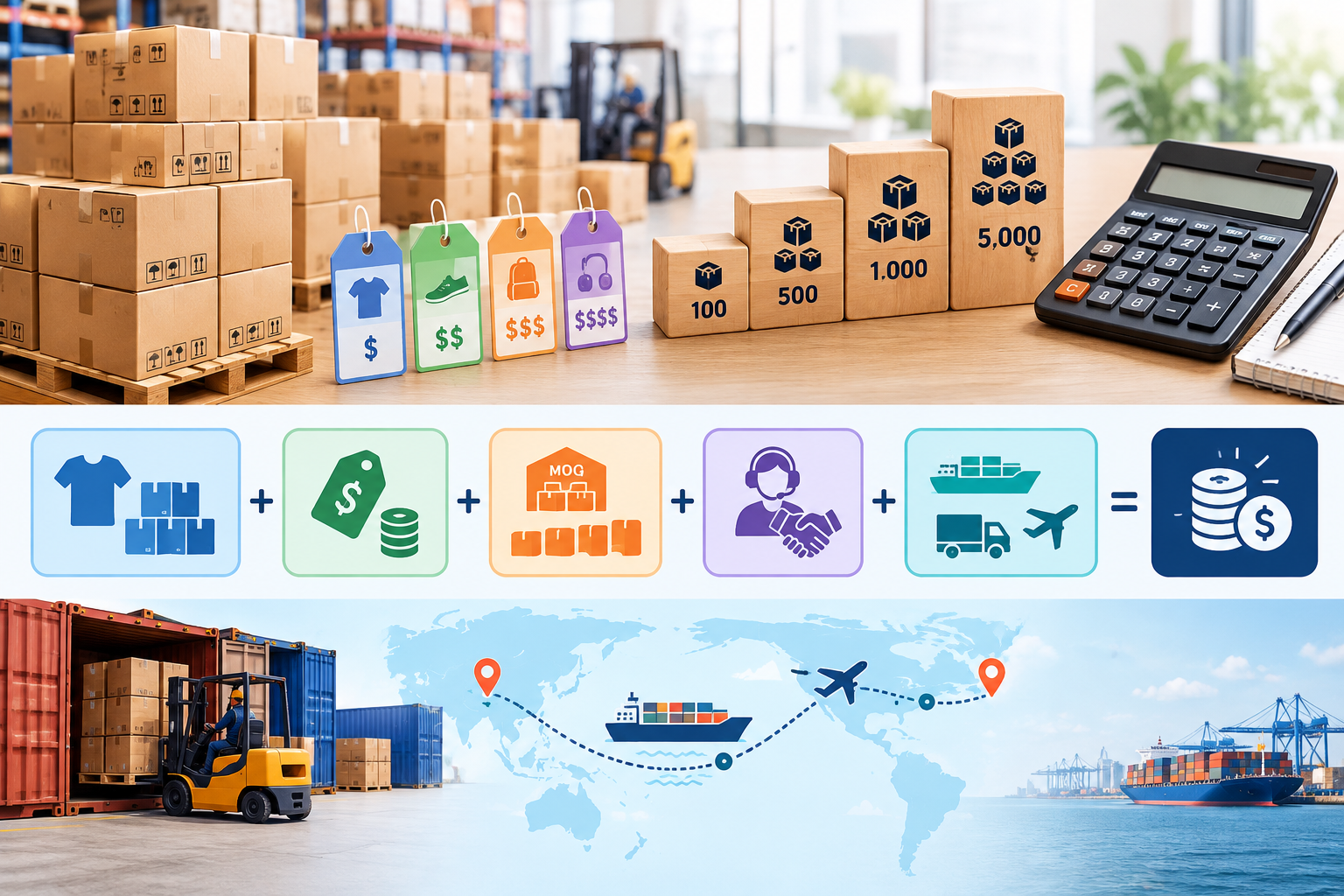
A low unit price can lose once you add the rest: unit price, multiplied by the minimum order if there is one, plus domestic shipping from each seller, plus agent or consolidation fees, plus the international leg, plus whatever duty applies at your end.
Two cases make the point without inventing numbers. A 1688 item at a quarter of the sheet price but with a six-unit minimum has committed you to six of something you have not yet held. A Pinduoduo item that arrives wrong has cost you the item, the freight both ways and three weeks.
That is why the honest comparison is landed cost per usable item, not listing price. Our article on shipping and customs covers how the second leg is priced.
Where the sheet fits
The usfans Spreadsheet is a filtered view across these sources rather than a fourth marketplace. Rows carry a batch note because the source matters.
If you are deciding between going direct and using the sheet, the useful question is how much your time is worth and how confident you are reading a Chinese listing. The walkthrough for moving a marketplace listing into the sheet shows how much translation and verification sits between a raw listing and a usable row.
Import rules and duty remain your responsibility whichever route you take. To compare rows directly, open the usfans Spreadsheet and read the batch notes side by side at sheetfinds.com. For a worked example of the trade-off, the jackets tab is a good place to study.
FAQ
Is usfans finds 1688 taobao pinduoduo pricing actually cheaper direct?
Only sometimes. 1688 has the lowest unit price but usually a minimum quantity, Taobao is flexible but carries agent and consolidation costs, and Pinduoduo is cheapest on paper with the widest quality variance. Add both shipping legs and duty before calling anything cheaper.
Which source do usfans finds 1688 taobao pinduoduo rows come from most often?
Mostly Taobao, because it sells single units and has the broadest range, with 1688 used where a wholesale tier makes sense and Pinduoduo where price decides. The batch note is the reliable indicator.
Do usfans finds 1688 taobao pinduoduo listings include shipping?
No. Raw marketplace prices are item prices, and sheet prices are too — shipping is quoted separately against your basket. Compare landed cost: item plus domestic freight plus the international leg plus duty.
Ready to look at the real thing? Open the usfans Spreadsheet, pick your category and compare rows side by side before you commit.
usfans Spreadsheet