usfans Spreadsheet Shipping: Weight and Customs

On this page
Shopping price is only half the cost. International shipping on a small parcel is charged by weight and volume, and customs handling sits on top. Most buyers who feel they overspent paid for a box that was too big, not for the item. This guide explains how a usfans Spreadsheet order moves from row to doorstep, and which decisions you control.
Chargeable weight is not what the parcel weighs
Every line charges on chargeable weight: the greater of the actual scale weight and the volume the parcel occupies. Transport space is the scarce thing, so a large light parcel is priced as though it were heavier.
The volume figure comes from the carton dimensions. The general rule is length × width × height in centimetres, divided by a divisor commonly of 5000, sometimes 6000, depending on the line and destination. Treat that as the shape of the calculation, not a fixed rate — the divisor, minimum charge and rounding vary, so check the line’s own rules.
A padded jacket weighing six hundred grams but filling a large box is billed well above its scale weight. A pair of shoes and a folded tee cost less in one tight carton than two loose ones.
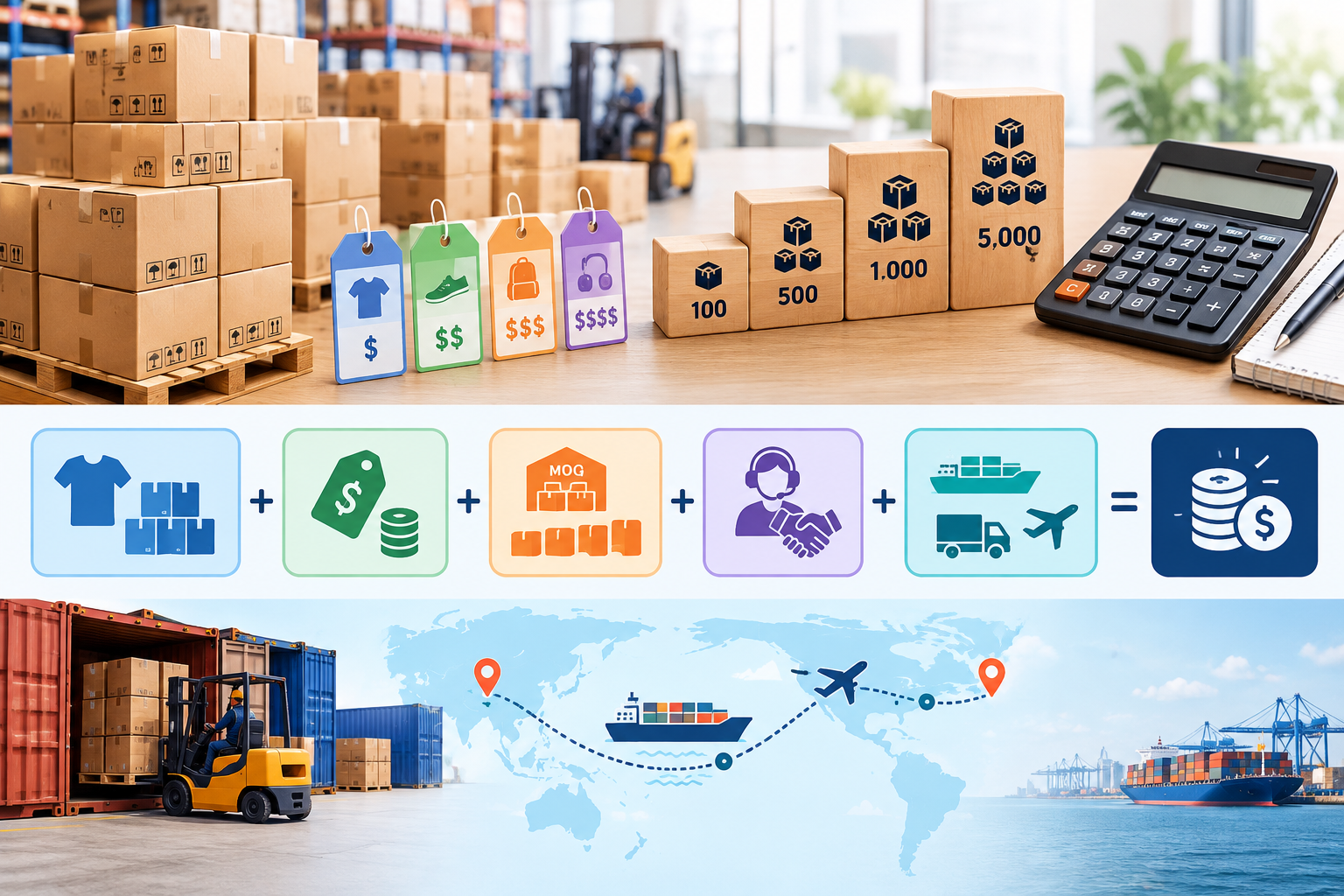
The sheet price never includes shipping. Compare landed cost — item, curation, handling, freight and any duty — before deciding whether a row is good value. The payments guide covers how the item side is settled.
How to keep the chargeable weight down
Consolidate across sellers
Buying several rows from different sellers into one warehouse parcel spreads the fixed costs. Each separate parcel pays its own minimum, handling and base rate. Three small orders sent individually are dearer than three items packed together.
Remove shoeboxes
Shoe boxes are near-empty space wrapped in cardboard, and they inflate volume more than almost anything else in a typical order. Removing them saves both dimensions and weight. If you want the box, ask for it deliberately and accept the cost.
Split shoes from clothing when it pays
Footwear is dense; clothing is bulky. A mixed parcel often lands in a higher tier than either half alone, because the line prices on volume and the clothes set the dimensions. If a combined parcel crosses a tier, two parcels can be cheaper — and sometimes not. Ask for both configurations.
Choose the line by destination and speed, not price alone
The cheapest line is not automatically the right one. Lines differ on destinations served, tracking, what they accept, and realistic transit time. A line that saves a little and adds three weeks is a poor trade for an event.
Packing decisions worth making up front
- Combine everything you can into one parcel per dispatch.
- Ask for shoeboxes to be removed unless you want them.
- Leave creasable items packed with their original support.
- Check the line accepts the item type before it reaches the warehouse.
- Ask for a photo of the packed parcel and its dimensions before it ships.
- Split the shipment if the combined parcel would cross a weight tier.
- Keep one item ID list per parcel so you can identify what arrived.
Customs: declare honestly
Your parcel crosses a border, and what happens there is governed by your country’s rules, not by the sheet. A declared value is a statement you are making, and under-declaring looks like a saving until something goes wrong.
Two things break when the declared figure is not the real one. If a parcel is inspected, the mismatch between paperwork and contents becomes the problem, and the delay lands on you. If a parcel is lost or damaged, insurance settles against the declared figure — so a parcel declared low pays out low.
Duty thresholds vary by country, change over time, and depend on the goods and the shipping method. Know roughly where your own country’s threshold sits and expect to pay duty and tax when a parcel exceeds it. Importing is your responsibility as the buyer; legality, restricted items and duty are on your side of the line.
For the wider picture on sourcing, the platform comparison explains how the marketplace you buy from shapes a parcel, and the category overview flags which item types are the most space-hungry.
Planning a first parcel
Start with one or two rows rather than a full wardrobe. A small parcel teaches you what your destination’s freight and duty look like without a large exposure. Open the main store, pick rows from a single category if you can — shoes and jackets pack very differently — and ask for a quote before anything ships. The order steps guide covers the sequence.
Keep the item IDs for the whole parcel. When a box arrives with four rows inside, that list is how you tell which garment is which. The usfans Spreadsheet row for each item is the record you compare against.
FAQ
Why is usfans Spreadsheet shipping so expensive for light items?
Because chargeable weight takes the greater of scale weight and volumetric weight. A bulky light item occupies space a denser parcel would use, so the line bills for the space rather than the grams. Removing packaging and consolidating parcels reduces it.
How is volumetric weight calculated for usfans Spreadsheet parcels?
Multiply length, width and height in centimetres, then divide by a divisor commonly of 5000 or 6000 depending on the line. Treat that as a general rule only — each line publishes its own divisor, rounding and minimum charges.
Should I declare a lower value on my usfans Spreadsheet package?
No. Under-declaring risks problems at inspection, and any insurance payout settles against the declared figure rather than what you paid. Declare honestly, know your country’s duty threshold in general terms, and budget for tax when a parcel exceeds it.
Ready to look at the real thing? Open the usfans Spreadsheet, pick your category and compare rows side by side before you commit.
usfans Spreadsheet