usfans Spreadsheet Sizing: Fit Every Item Right
On this page
Most sizing complaints are not about the garment. They are about a letter. A factory listing labelled XL has no obligation to match the XL on a rack in your local shop, and it usually does not. Work from measurements, not labels. This guide covers how to do that for the items in a usfans Spreadsheet row.
Why factory sizing drifts from retail sizing
Two workshops making similar items can grade differently — one adds five centimetres across the chest per size, another adds three. Labels get attached at the end, sometimes by whichever tag roll was open.
Regional baselines differ too. A size built for a domestic customer population is not the same shape as one built for a Western retail chain. Shoulders may be narrower, sleeves shorter, bodies boxier. None of this is a defect.
Every sheet row should list measurements taken from the actual item. If a row shows only letter sizes, treat that as a gap and ask before ordering — the category overview flags which ones document fits well.
Measure a garment you already own
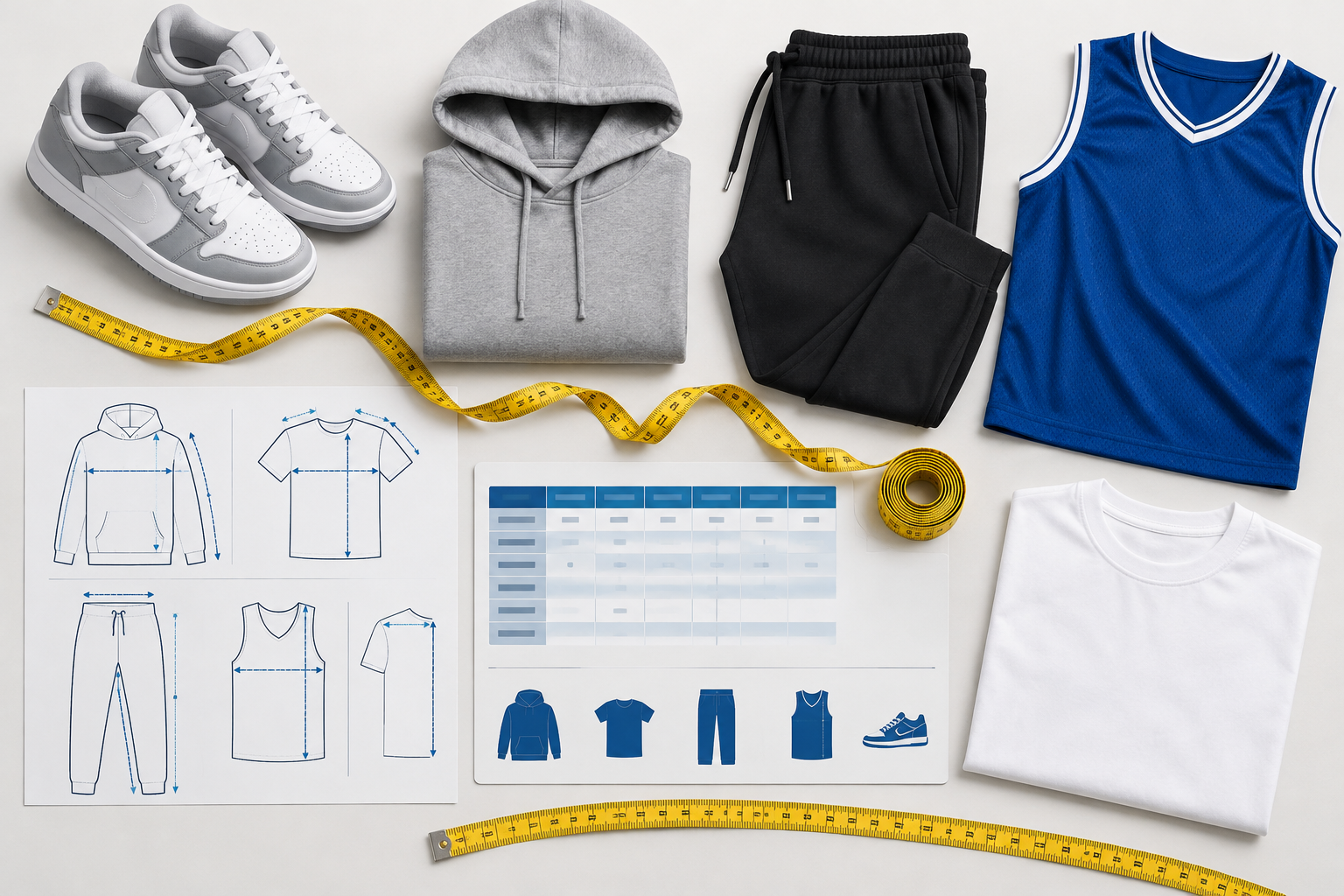
The most reliable comparison is a piece you already wear and like. Lay it flat, smooth the wrinkles without stretching, and measure with a soft tape.
- Chest (pit-to-pit): straight across from one armpit seam to the other, then double it.
- Shoulder: seam to seam across the top of the back, not the front.
- Body length: from the highest point of the shoulder, or from the collar seam on a shirt, down to the hem.
- Sleeve: shoulder seam to cuff. For raglan cuts, measure from the collar instead.
- Waist: across the top band, doubled. On pants with an unusual cut, also measure the rise.
- Inseam: crotch seam to hem, along the inner leg.
Write the numbers down before you open the sheet. Comparing a remembered size to a listed size is how people end up with two of the same wrong jacket.
Category by category
Shoes
Measure your foot length in centimetres, standing, late in the day when your foot is at its largest. Put your heel against a wall, mark the longest toe, and measure the gap. Add roughly half a centimetre for a normal sock and the spread of a walking foot.
Listings often quote a Chinese size number alongside a centimetre figure. Trust the centimetre figure, and check whether it means foot length or insole length. They are not the same.
Hoodies and sweaters
Decide the look before the size. A hoodie matching your chest exactly will sit close and stop at the waist. If you want the oversized drape these cuts are built for, size up one, and check the shoulder still lands near your actual shoulder rather than halfway down your arm.
T-shirts
Shoulder width decides the look more than chest does. A tee whose shoulder seam sits on your shoulder reads fitted; one that drops two or three centimetres reads relaxed. Compare the row’s shoulder figure to a tee you like.
Pants
Waist alone is not enough. Hip measurement decides whether the pants pull across the seat, and a listed waist can be accurate while the hip is tight. Measure both on a pair that fits. For a tapered leg, check the thigh if the row lists it.
Jerseys
Football and basketball kits use different patterns and both run close. Football shirts are cut slim with short sleeves; basketball jerseys are longer and looser but often narrow at the chest. Do not assume one size carries across. See the jersey category for rows with full measurement sets.
Quick reference
| Item | Key measurement | Typical adjustment |
|---|---|---|
| T-shirt | Shoulder width, then pit-to-pit | Keep true to a tee you like; no adjustment |
| Hoodie / sweater | Pit-to-pit and body length | Size up one for an oversized drape |
| Jacket | Pit-to-pit and sleeve length | Size up one if you plan to layer |
| Pants | Waist and hip, plus inseam | Match hip first, then check inseam |
| Jeans | Waist flat and front rise | Rise often runs short |
| Shoes | Foot length in centimetres | Add about 0.5 cm of clearance |
| Football jersey | Chest and body length | Size up one for a regular fit |
Reading a row properly
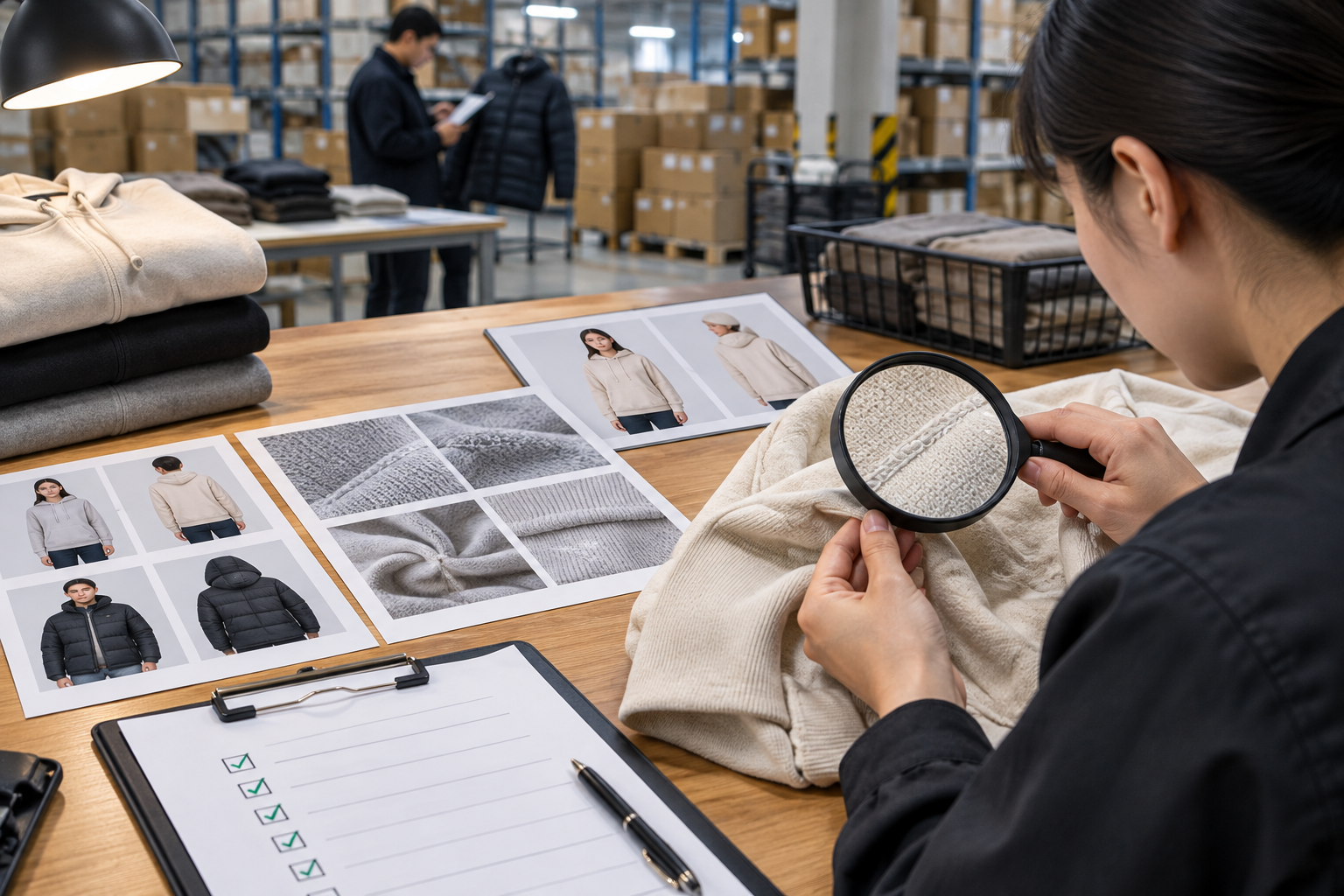
Measurements in a row are usually taken flat, on one garment, not averaged across a batch. A tolerance of about a centimetre either way is normal; two centimetres is worth asking about. The order steps guide explains how to raise that question in the right place.
Keep the item ID from every row you buy. When a second order of the same item arrives slightly different, the ID lets you compare like with like.
Open the main store sheet and compare its flat measurements with yours. If a row is missing figures, the usfans Spreadsheet index shows which categories are best documented, and the main guide explains how rows are built.
FAQ
Do usfans Spreadsheet sizes run small or large?
Neither consistently. It depends on the workshop and the pattern. Some rows run close to US retail, others are cut narrower through the shoulder. Compare the listed flat measurements with a garment you own rather than assuming a direction.
How do I measure my foot for usfans Spreadsheet shoe rows?
Stand with your heel against a wall late in the day, mark your longest toe, and measure the distance in centimetres. Add about half a centimetre for clearance. Check whether the row’s figure is foot or insole length before you pick a size.
Should I size up in a usfans Spreadsheet hoodie?
If you want the oversized drape these cuts are designed for, yes — one size up is usual. For a close fit, match the pit-to-pit and body length on the row to a hoodie you already wear.
Ready to look at the real thing? Open the usfans Spreadsheet, pick your category and compare rows side by side before you commit.
usfans Spreadsheet