Pinduoduo Quality Checks for usfans Finds
On this page
Pinduoduo competes almost entirely on price. That explains most of what you meet when a usfans Spreadsheet row points there: aggressive pricing, fast-moving stock, and quality that shifts between batches. This guide covers checking an item before you accept it.
Why batch variance is the core issue
On a price-driven marketplace, sellers are rewarded for shaving cost. A workshop that wins on price wins by changing something — a lighter fabric, a cheaper zip, a print applied in one pass instead of two. Sometimes the change is invisible.
So one row does not guarantee one product forever. The same row can ship noticeably different goods across restocks. That is not a reason to avoid the platform — it is a reason to check every order rather than trusting the last one.
Request warehouse photos before approval
Most buying routes give you a window to look at an item at the warehouse before it is packed for international shipping. Use it. That window is the cheapest point at which a problem can be fixed, because the item is still in the country it was made in.
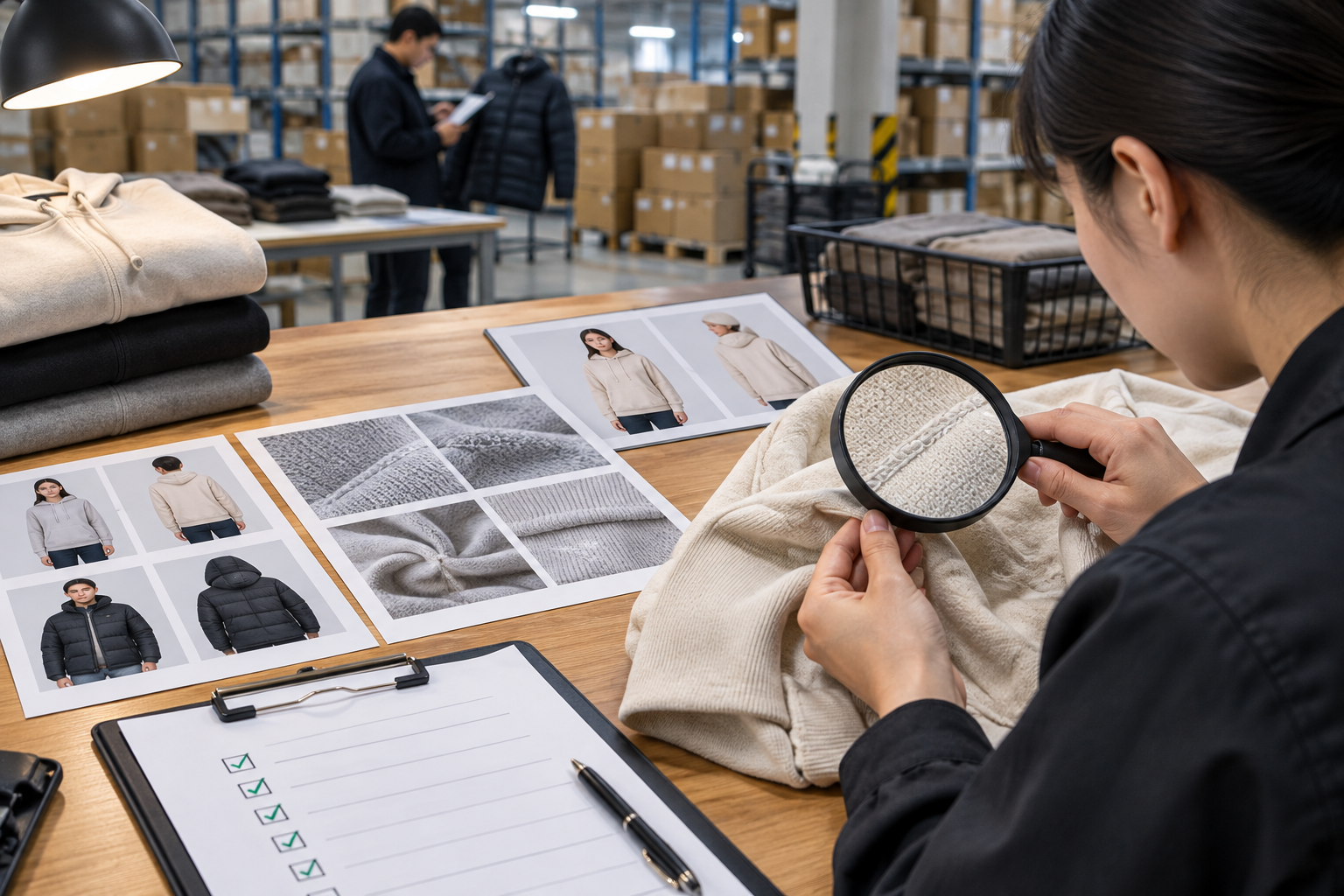
Ask for specific photographs. Useful angles: the item flat, a close-up of the chest or front print, the inside of a seam, the label area, and a tape across the chest and body length. A tape in frame answers the measurement and description questions at once.
Photos taken on a warehouse table under neutral light are worth more than any studio image. If a seller’s shot and the warehouse shot disagree, the warehouse shot is what will arrive.
What to look at
Stitching at seams and panel joins
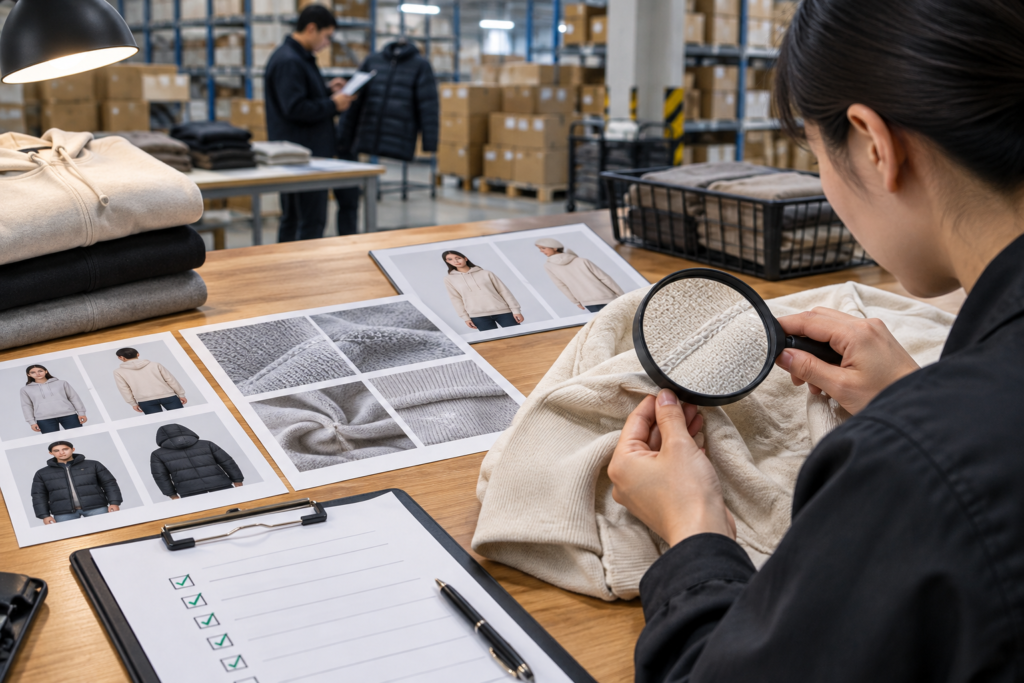
Check the shoulder seam, the side seam and, on a multi-panel item, the joins between panels. Look for even spacing, no skipped sections, and no puckering where two panels meet. Loose thread is trivial. A seam that gaps when the fabric is pulled is not.
Print alignment and centring
Look at where the graphic sits relative to the collar, the placket and the side seams. A print visibly off-centre reads wrong across a room and cannot be fixed. Also check whether it sits flat or has lifted at an edge — lifting predicts cracking after a few washes.
Colour under neutral light
Warm studio lighting flatters almost anything and shifts colour noticeably. Ask for a neutral-light photo, or compare the warehouse shot against a second angle. A garment two shades off in neutral light is a wrong colour.
Measurements against the chart
Lay the tape across the chest and along the body length, and compare both to the row. A single centimetre of variance is normal on a flat measurement. The sizing guide explains what each figure means.
Hardware
Zips should run without catching and sit flat when closed. Buckles, eyelets and snaps should be firmly set, not loose in their holes. On bags and jackets, pull the zip through its full length — one that fails at the last two teeth will fail completely.
Shoes: sole joins and glue
Check where the upper meets the midsole, all the way around. Look for gaps, uneven adhesive, and glue smeared onto the upper. Check the toe box from both sides and ask for a shot of the heel counter. Visible excess glue suggests a rushed batch.
Browse shoes and hoodies for rows with full measurement sets and warehouse photos.
When to reject, and when to accept with a note
Rejecting everything is as costly as accepting everything. The judgement is whether the fault is structural or cosmetic.
- Structural fault. A split seam, a zip that does not close, a buckle that will not hold, a sole separating from the upper. These fail in use.
- Measurements beyond tolerance. Chest or length off by more than a couple of centimetres. Ask for a size swap while the item is still at the warehouse.
- Wrong colour. Clearly a different shade under neutral light — it will not match what you planned around.
- Print materially off-centre or lifting at the edges. It cannot be corrected later.
- Wrong item or variant. Different graphic, cut or hardware. Reference the item ID.
Accept with a note when variance is cosmetic and small: a loose thread, slight colour depth difference, a print a few millimetres off, a minor adhesive mark. Keep the photo. That record supports a claim later if the item fails.
Keep the item ID for every order — it is the reference that says which row, batch and warehouse photo you mean. Sheet prices exclude shipping, so a rejection before dispatch is far cheaper than a return after it. The fake sheet guide and the category overview help you judge which usfans Spreadsheet rows are worth the effort.
When you are ready, open the sheet at the main store and note the item ID before requesting photos.
FAQ
Are usfans finds pinduoduo items lower quality than other sources?
Not automatically, but the platform rewards cost-cutting, so variance between batches is higher. Checking warehouse photos before approval is what turns that variance into something you can manage.
What photos should I ask for before approving a usfans finds pinduoduo order?
Ask for the item flat, a close-up of the front print, the inside of a shoulder seam, the label area, and chest and body length measured with a tape in frame. For shoes, add the sole join and heel counter. Neutral light, not warm studio light.
Should I reject a usfans finds pinduoduo item for a small colour difference?
Only if it is clearly a different shade under neutral light. Slight depth variation between batches is normal and cosmetic — accept it with a note. A shade that changes what you planned to wear it with is a wrong colour.
Ready to look at the real thing? Open the usfans Spreadsheet, pick your category and compare rows side by side before you commit.
usfans Spreadsheet